 Skip to content


When Does Fresh Roasted Coffee Taste Best? The 7–10 Day Rule
Introduction
“Freshly roasted coffee doesn’t peak when most people think it does.”
Freshly roasted coffee has become a badge of honor in the specialty coffee world. “Roasted today” sounds irresistible—almost like a guarantee of quality. But here’s the truth most coffee marketing doesn’t explain: fresh doesn’t always mean better, and coffee brewed too soon after roasting can actually taste worse than coffee that’s been allowed to rest.
If you’ve ever brewed a cup that smelled incredible but tasted sharp, hollow, or unbalanced, timing—not bean quality—may have been the issue. Specialty-grade Arabica coffee undergoes significant chemical and physical changes in the days following roasting. Carbon dioxide levels, aromatic compounds, moisture distribution, and extraction behavior all evolve rapidly during this period. The result? Coffee that often reaches its true peak flavor days later, not on roast day.
In this guide, we’ll break down the science of coffee degassing, explain why most specialty coffees taste best 7–10 days (sometimes up to 20 days depending on handling, processing, packaging, and storage) after roasting, and debunk the myth that “day-one coffee” represents peak freshness. You’ll learn how roast level, brew method, and packaging influence flavor, and why controlled resting is essential for balanced extraction, sweetness, and clarity.
We’ll also show how General Warfield’s Coffee® designs its roasting, packaging, and storage practices around this scientifically optimal window—so your coffee arrives ready to shine, not fight physics. To start, let’s distill the most important insights into clear, practical takeaways.
Key Takeaways
-
Freshly roasted coffee usually tastes best 7–10 days after roasting, not on roast day, because beans need time to release excess carbon dioxide that interferes with proper extraction (sometimes even up to 20 days depending on packaging and techniques).
-
Fresh-roasted beans release massive amounts of CO₂ for 3–5 days, which disrupts water flow through the coffee bed and causes uneven extraction, especially problematic for espresso
-
From about day 7–10, aromatic compounds, CO₂ levels, and moisture distribution reach a stable, sweet, and balanced cup profile that represents the coffee at its peak
-
The idea that you should “drink it the day it’s roasted” is largely a marketing myth that confuses “recently roasted” with “scientifically optimal”
-
General Warfield’s Coffee® uses nitrogen flushing, high oxygen barrier packaging, and one way degassing valves so this 7–10 day peak is preserved even longer than typical store coffee.
-
Our GENFRESH™ protocol will keep your coffee in an unopened bag for 12 months+ while maintaining peak freshness.
Why Coffee Isn’t At Its Best On Day 1

Walk into a roast room minutes after a batch drops from the drum and you’ll encounter one of the most intoxicating aromas in the food world. Waves of caramelized sugars, toasted nuts, and chocolate notes hang in the air. It’s natural to assume that brewing those beans immediately would capture that magic in your cup. But here’s what experienced roasters and competition baristas have learned: the espresso pulled from those same beans a week later—day 7, day 8, day 10—often tastes dramatically better. Sweeter. More balanced. More complex. The roast room smells incredible, but that aroma isn’t the same thing as great extraction.
Right after roasting (0–24 hours), beans are chemically unstable. Carbon dioxide levels inside the cell structure are extremely high, sometimes exceeding 10–12 mg per gram of coffee in the first 24 hours, and aromatic compounds are still equilibrating within the porous bean matrix. This gas isn’t just sitting idle—it’s actively escaping, especially when hot water hits the grounds. When you brew on day 1, gas violently escapes from the coffee bed, disrupting water contact. The result? Under-extraction in some zones, over-extraction in others, and a cup that often tastes sour, thin, or strangely hollow.
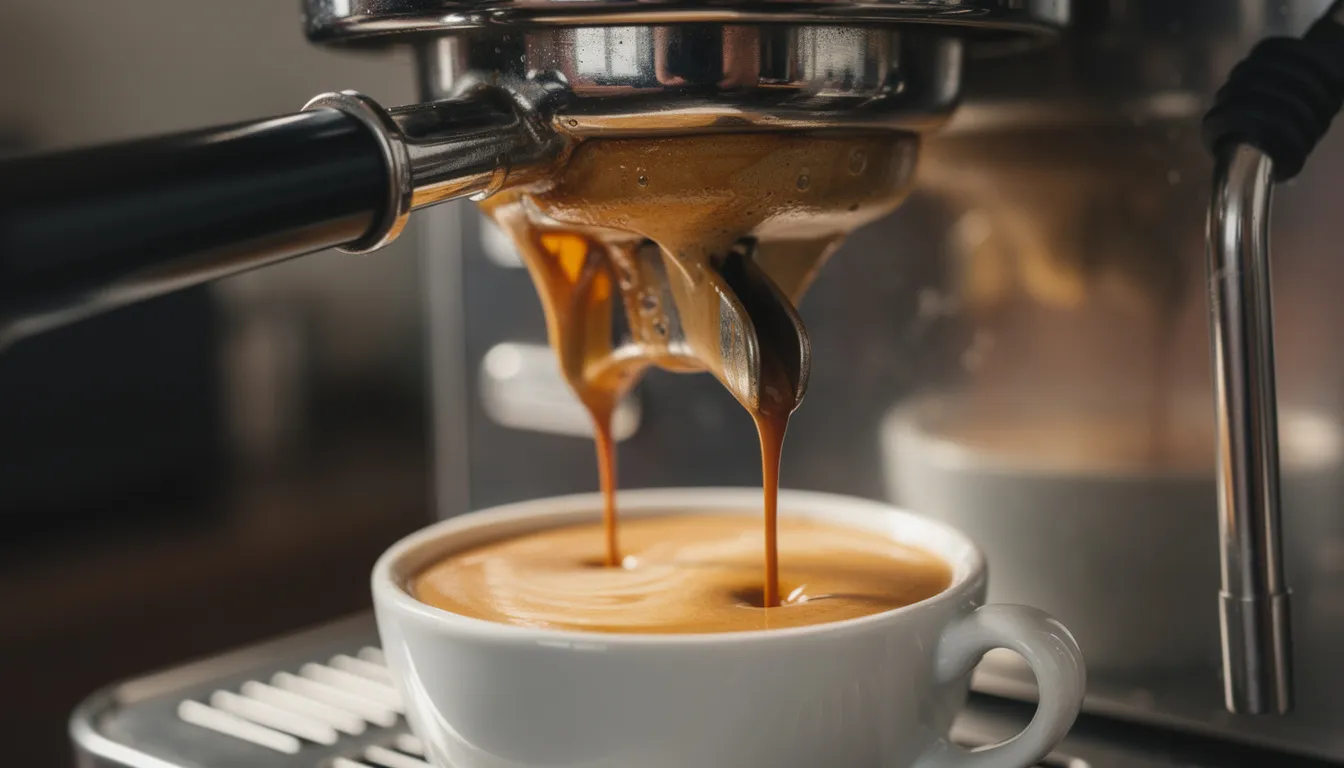
Consider a practical comparison: take the same lot of specialty Ethiopian coffee and pull espresso shots on day 1 versus day 8. On day 1, crema explodes upward in enormous, coarse bubbles that dissipate within seconds. The shot runs fast despite a fine grind, channeling is visible, and the taste is bright but sharp—more “sparkle” than sweetness. On day 8, that same coffee produces tight, velvety crema that persists. The shot flows evenly, and suddenly those promised tasting notes—blueberry, jasmine, dark chocolate—emerge in harmony. The beans haven’t changed; they’ve simply had time to settle into their optimal state.
The Science Of Coffee Roasting
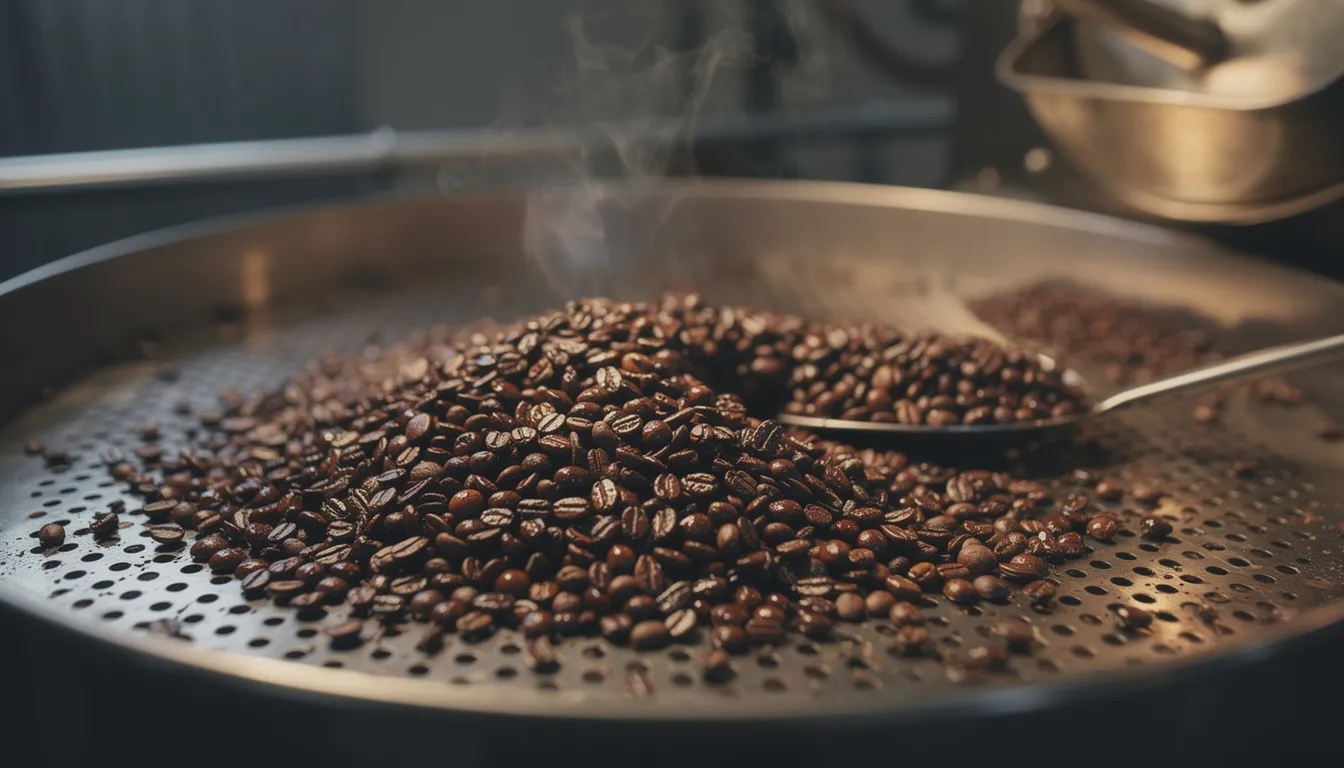
Roasting transforms dense, pale green seeds into the brittle, aromatic coffee beans we recognize, and it does so through a cascade of heat-induced chemical reactions. Understanding this process explains why those beans need time to rest before they’re ready to brew at their best.
The roasting process unfolds across several temperature milestones. During the drying phase (roughly 100–160°C), moisture evaporates and the beans transition from green to yellow. As temperatures climb into the 150–200°C range, Maillard reactions and caramelization begin, generating the hundreds of volatile aromatic compounds—esters, aldehydes, ketones, furans, and pyrazines—that define coffee’s complex flavor. Beyond first crack (typically around 196–205°C for specialty roasts), the development phase determines the final roast level and flavor balance.
During this process, pyrolysis breaks down organic matter, creating substantial carbon dioxide that becomes trapped inside the bean’s cellular structure. The cell walls grow more porous, internal pressure rises, and gases remain locked in microscopic pores and vacuoles. This trapped gas plays a dual role: it contributes to desirable qualities like crema formation and acts as a protective buffer against oxygen, but excessive levels interfere with extraction. Coffee science literature, including foundational work by researchers like Illy and Viani, has documented these phenomena extensively, establishing the scientific basis for why immediate brewing produces inconsistent results.
Maillard Reactions, Caramelization, And Flavor Creation
The Maillard reaction is a series of chemical reactions between amino acids and reducing sugars that occurs under heat. It’s responsible for the browning of bread crusts, the sear on a steak, and much of what we love about roasted coffee. In coffee, Maillard reactions peak between approximately 150–190°C and generate nutty, toasty, and chocolate-like notes through compound families like pyrazines and furans.
Caramelization of sucrose and other sugars occurs at higher temperatures, producing sweetness and caramel/toffee notes that contribute to a coffee’s body and depth. Darker roasts have less remaining sugar because more of it has been converted, but they develop more “roasty” compounds from extended pyrolysis. Lighter roasts retain more original sugars and acids, which is why they often taste brighter and more fruit-forward.
Here’s what many people miss: the chemistry isn’t “finished” the moment beans leave the roaster. Some reactions continue to coast for hours as the beans cool and equilibrate. Volatile compounds redistribute themselves, moisture levels stabilize, and the internal structure settles. Think of it like fresh-baked bread—you don’t slice it the moment it exits the oven because the crumb needs time to set. Coffee follows the same principle.
Gas Formation During Roasting
Carbon dioxide is the dominant gas produced during roasting as organic material breaks down under heat. By the time beans exit the roaster, CO₂ content typically represents 1–2% of the bean’s mass by weight—a significant amount trapped within a fragile cellular matrix.
Interestingly, lighter roasts tend to retain more internal CO₂ than dark roasts. This happens because the cell structures of lightly roasted beans remain more intact, creating smaller, tighter pores that hold gas more effectively. Dark roasts develop more fractures and surface oils, allowing gas to escape more rapidly. This difference has practical implications for how long different roast levels should rest before brewing.
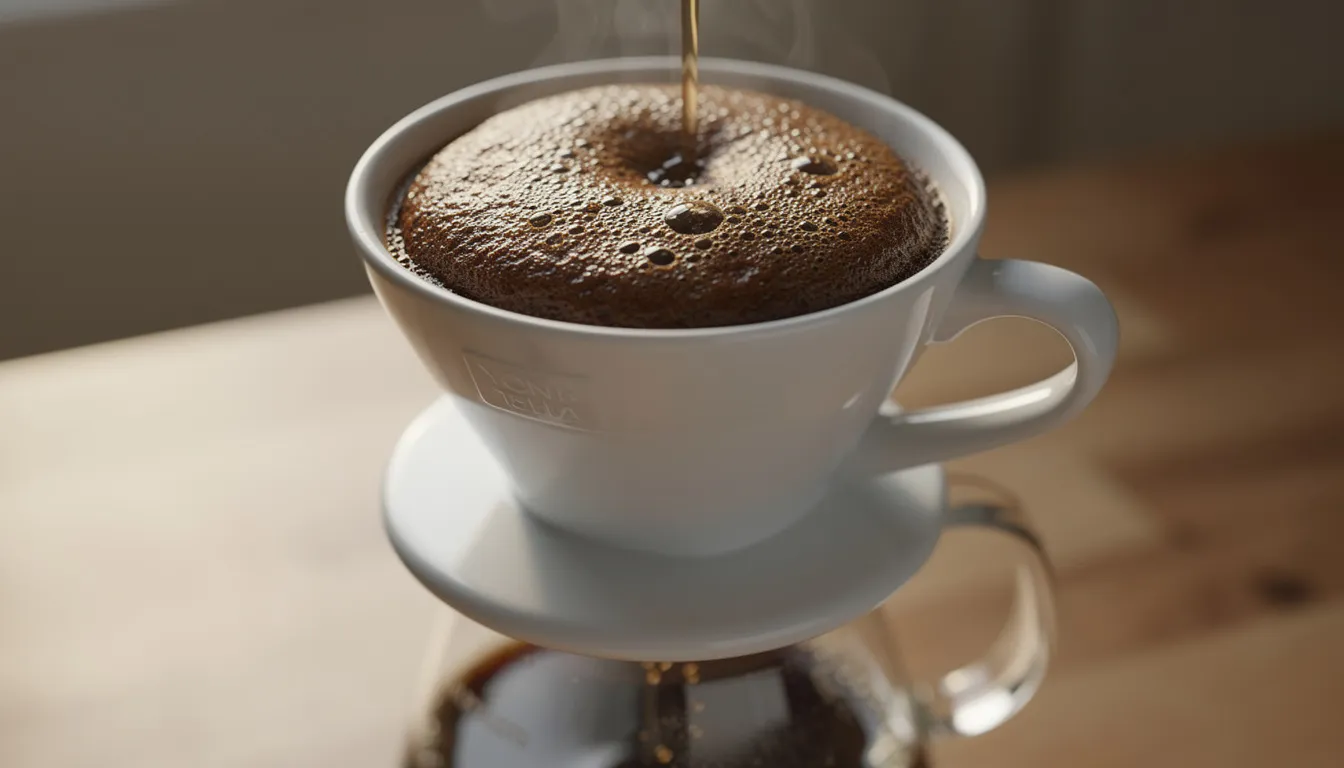
Over the first 10–14 days, trapped gas gradually diffuses out of the bean in a process called degassing. During extraction, high internal pressure causes aggressive bubbling and “foaming” as hot water contacts the grounds—particularly visible during espresso extraction or the bloom phase in pour-over brewing. This gas pushes water away from coffee particles, creating extraction inconsistencies. The optimal flavor window emerges only after degassing has slowed enough to allow stable contact between water and coffee solids.
Watch our short, science-based explainer below to see why freshly roasted coffee reaches peak flavor 7–10 days after roasting — not on Day 1.
Degassing: What Happens In The First 2 Weeks
Degassing is the central process that explains why coffee usually tastes best 7–10 days after roasting rather than on roast day. Understanding its timeline helps you predict when your beans will hit their peak.
A typical degassing curve follows a predictable pattern: very rapid gas release for 24–72 hours, then slowing but still significant loss over days 3–10, followed by a long tail extending over several weeks. Studies have shown that 50–70% of total CO₂ is released within the first week, depending on roast level, bean density, and environmental conditions.
Environmental factors strongly affect this curve. Warmer storage temperatures accelerate both degassing and the oxidation that causes staling. Oxygen-rich environments (like a paper bag or open container) speed up both processes simultaneously. This is why packaging matters so much—the goal is to allow controlled degassing while preventing oxidation.
Degassing is beneficial up to a point because it improves extraction stability. But eventually, its completion coincides with increased oxidation and flavor loss, defining a practical “freshness window” that smart roasters and consumers work within.
Timeline: From Roast Day To Day 14
Understanding what happens at each stage helps you plan when to brew:
- 0–24 Hours CO₂ release is at its most extreme. Espresso shots often gush or channel unpredictably despite careful grind adjustments. Drip coffee tastes thin, sharp, or oddly “sparkling”—that fizzy sensation comes from dissolved carbon dioxide lowering the pH and creating carbonic acid. Under-extraction is almost guaranteed because gas escaping from the grounds physically blocks water contact.
- 1–3 Days Crema looks visually impressive—thick and voluminous—but it’s composed of large, unstable bubbles that dissipate quickly. Tasting notes are dominated by sharp acidity and “roasty” top notes rather than integrated sweetness. Many baristas describe coffee at this stage as “one-dimensional” or “aggressive.”
- 4–7 Days Extraction stability improves noticeably. Brews become more consistent shot to shot, sweetness starts to emerge, and origin flavors become clearer. An Ethiopian’s florals, a Colombian’s caramel, a Kenyan’s berry notes—these characteristics begin expressing themselves as the gas interference diminishes.
- 7–10 Days This is the sweet spot for many specialty roasts. Gas levels have declined enough for balanced extraction but remain high enough to protect against oxygen ingress and maintain aromatic intensity. Flavor integration peaks: acidity, sweetness, and body harmonize rather than competing.
- 10–14 Days Coffee often remains excellent, especially when stored with nitrogen flushing and high-barrier film. However, subtle high-note aromatics—delicate florals, bright fruit tones—gradually begin to fade. The cup may taste slightly “rounder” or less complex, though still very good compared to poorly stored alternatives.
Why 7–10 Days Is Often Ideal
For many light to medium roasts, peak flavor typically occurs between day 7 and day 10 after roasting. This isn’t arbitrary marketing—it emerges from the intersection of gas dynamics, aromatic volatility, and moisture redistribution inside the bean.
By this point, CO₂ has declined to a level that no longer disrupts extraction but still offers protection from oxygen. Think of it as a “buffered” state where coffee is both stable and expressive. The gases that remain create a mild protective atmosphere inside the bean’s pores, slowing oxidation while no longer interfering with water contact during brewing.
Optimal windows vary slightly by brew method:
|
Brew Method |
Ideal Rest Window |
Notes |
|---|---|---|
|
Espresso |
5–12 days |
Pressure amplifies gas effects; longer rest often needed |
|
Pour-over/Drip |
4–14 days |
More forgiving; bloom handles some gas release |
|
Immersion (French Press) |
5–10 days |
Extended contact time compensates somewhat |
The Specialty Coffee Association ’s educational materials and numerous coffee science publications support this rest-then-brew approach. The “day 1 is best” myth contradicts both empirical testing and the basic chemistry of degassing.
Extraction Physics: How CO₂ Affects Taste In The Cup

“Extraction” simply describes how well hot water dissolves desirable compounds from ground coffee. Good extraction means balanced dissolution of acids, sugars, and aromatic molecules. Poor extraction means either too little (sour, thin) or too much (bitter, harsh) of those compounds making it into your cup.
Too much trapped gas creates micro-bubbles that block or divert water flow paths in the coffee bed. When you’re grinding coffee and brewing immediately after roasting, these gas pockets lead to uneven extraction: some areas get over-extracted (bitter) while others remain under-extracted (sour). The resulting cup tastes confused and unbalanced.
This manifests differently across brew methods. In espresso, channeling occurs as water follows the path of least resistance around gas pockets. In pour-over, uneven bloom and water bypass create patchy saturation. Even immersion brews like French press show inconsistent flavor development when gas continues escaping throughout the steep.
A balanced extraction typically falls within a target range of total dissolved solids (TDS) and extraction yield. Very fresh, gassy coffee tends to under-shoot these numbers at normal brew recipes, requiring constant adjustments that often chase a moving target. Baristas observe this empirically: on day 2–3, even carefully dialed shots run too fast or produce unstable, foamy crema. By day 7–10, flow stabilizes and yields become repeatable.
Impact On Espresso Versus Filter Coffee
Espresso is especially sensitive to CO₂ because of high pressure (approximately 9 bar) and short contact times (25–35 seconds). There’s simply no time for the coffee bed to “settle down” during extraction—whatever gas is present will disrupt the process.
High gas content causes several problems in espresso:
-
Crema inflates excessively with large, unstable bubbles
-
Pressure inside the puck fluctuates unpredictably
-
Channeling creates simultaneous over- and under-extraction
-
The resulting shot shows sharp acidity and weak body
This is why many high-end cafes recommend waiting and rest espresso-destined beans at least 5–7 days post-roast, often preferring 7–12 days for light roasts to achieve smooth, sweet, syrupy shots. World Barista Championship competitors routinely use coffee 5–14 days off roast—never day 1.
For filter methods like pour-over and batch brew, the situation is more forgiving but still noticeable. Very fresh coffee produces unstable blooms that dome dramatically but unevenly, requiring constant grind and brew-ratio adjustments. Around 4–10 days, drawdowns become more predictable and flavor clarity improves significantly.
Practical tip: If a coffee seems “too punchy” and impossible to dial in, simply waiting another 2–3 days post-roast often works better than endlessly changing grind settings.
Oxidation, Staling, And The True Freshness Window
While degassing improves coffee over its first week, oxidation works in the opposite direction, gradually degrading quality over time. Understanding both processes reveals the true meaning of “freshness.”
Oxidation is the main process that makes roasted coffee go stale. Oxygen reacts with lipids (coffee oils) and aromatic compounds, causing rancidity and loss of delicate florals, fruits, and sweetness. Those vibrant origin characteristics fade into flat, cardboard-like notes. The antioxidant content in coffee—including compounds that contribute to health benefits—also degrades as oxidation progresses.
True “freshness” isn’t a single day but a window shaped by two opposing processes: beneficial degassing and harmful oxidation. Initially, coffee is too gassy but well-protected by its own CO₂ buffer. Then comes the peak where balance is optimal. Finally, the cup becomes increasingly oxidized as protective CO₂ escapes and oxygen diffuses into the bean.
Good packaging and storage slow oxidation substantially, stretching the high-quality window well beyond 10 days when done correctly. This is where the difference between thoughtful roasters and commodity coffee becomes most apparent.
Role Of Temperature, Light, And Moisture
Chemical reactions, including oxidation and aromatic breakdown, generally accelerate with higher temperature. This follows Arrhenius behavior—roughly, a 10°C increase can double reaction rates. Storing coffee at a stable, cool room temperature (around 18–21°C / 65–70°F) rather than in a hot kitchen or near a window can nearly double the time coffee tastes “peak.”
Light, especially UV, contributes to photo-oxidation of lipids and pigments. Just as vitamin E and beta carotene in food degrade under light exposure, coffee’s delicate oils and aromatics break down when exposed to bright conditions. Opaque packaging and storage in the dark are scientifically justified, not just aesthetic choices.
Moisture creates additional challenges. Roasted coffee is hygroscopic—it absorbs ambient moisture and odors readily. Fluctuations in humidity can cause micro-cracking in the bean structure and accelerate staling. Clinical nutrition research on food preservation consistently shows that moisture control is essential for maintaining freshness in fats and aromatic compounds.
General Warfield’s Coffee® controls temperature, humidity, and light exposure throughout storage and logistics specifically to preserve the 7–10 day peak flavor window as long as possible. It’s the same principle that protects antioxidants in fruits, vegetables, and other foods—environmental control prevents oxidation before it starts.
Marketing Myths: “The Fresher The Better” (But Not Quite Day 1)

“Roasted today” became a powerful marketing slogan because it sounds good and addresses a real problem: nobody wants stale coffee that’s been sitting on a shelf for months. But the message oversimplifies the science in ways that actually hurt consumers.
Many brands and cafés conflate two different ideas: “not months old” (which is genuinely good) and “brew it immediately” (which often isn’t optimal). The first addresses the industrial coffee problem of commodity beans sitting in warehouses. The second ignores everything we know about degassing and extraction physics.
Here’s a telling detail: sensory panels and barista competitions routinely favor coffees rested several days after roasting. World Barista Championship competitors almost never use day-1 coffee—they plan their competition beans to hit the 5–14 day window precisely. They know from experience that rested coffee extracts better, tastes sweeter, and scores higher.
Marketing copy rarely explains degassing because it’s more appealing to romanticize roast day as a magic moment. “Roasted while you wait” sounds exclusive. “Best after a week of rest” sounds… patient. But the American Journal of sensory evaluation and countless cupping sessions confirm the science: patience wins.
This isn’t about vilifying other roasters. Many excellent roasters use “fresh” messaging because it resonates with consumers who’ve been burned by stale supermarket coffee. The goal is separating evidence-based practice from catchy, oversimplified slogans.
How To Read Roast Dates And Claims Critically
Always look for a clear roast date on bags. A “best by” date alone doesn’t tell you when the coffee was roasted—it only indicates when the roaster thinks it’s no longer worth drinking. That could be 6 months or 18 months after roasting, depending on their standards.
Rule of thumb: For General Warfield’s Coffee® and other high-quality, valve-bagged coffee, aim to brew between day 5 and day 30 post-roast for most methods, with 7–10 days as the key sweet spot for many profiles.
Phrases that should prompt healthy skepticism:
|
Marketing Claim |
Reality Check |
|---|---|
|
“Ultra fresh” |
May mean too fresh for optimal extraction |
|
“Same-day roasted” |
Impressive but not flavor-optimal |
|
“Roasted while you wait” |
Better for theater than for your cup |
|
“Best before [distant date]” |
Tells you nothing about roast freshness |
Practical consumer tips:
-
Buy in sizes you’ll use within 3–4 weeks of the roast date
-
Track when a particular coffee tastes “just right” to your palate
-
Note that dark roasts often peak earlier (day 3–7) than light roasts (day 7–14)
Good marketing should educate rather than mislead. General Warfield’s Coffee® is transparent about optimal rest periods for each roast, putting cup quality ahead of simplistic freshness claims.
How General Warfield’s Coffee® Preserves Peak Flavor

General Warfield’s Coffee® designs the entire post-roast handling process around preserving the scientifically optimal 7–10 day flavor window as long as possible. This isn’t about adding shelf life for warehouse convenience—it’s about ensuring customers receive coffee poised at its peak.
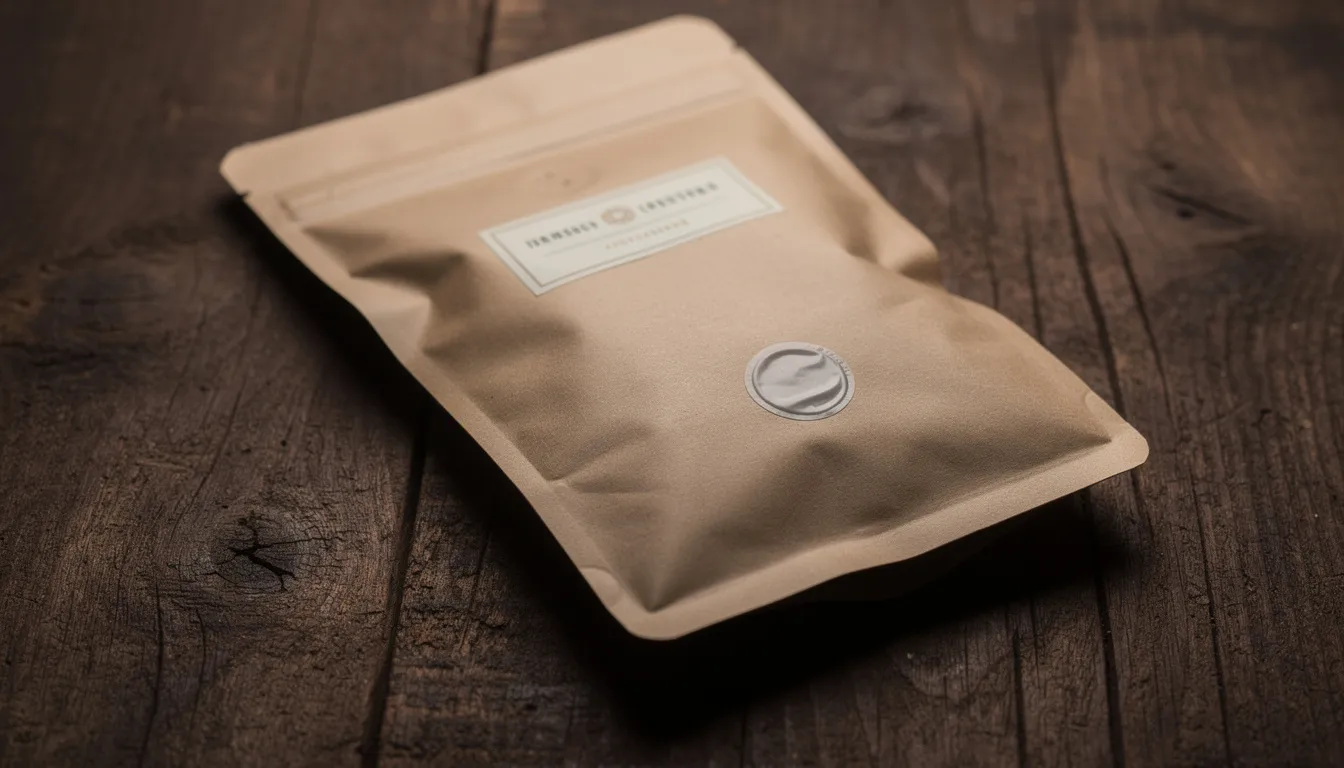
The brand combines nitrogen flushing, high oxygen barrier packaging, one way degassing valves, and controlled storage (temperature, humidity, darkness) to slow staling without trapping excessive CO₂. Each element addresses a specific aspect of coffee chemistry, working together as an integrated preservation system.
The practical result? A bag opened at day 10 still tastes vibrant weeks later because oxidation has been dramatically slowed from day one. The flexible packaging technology used isn’t optional or decorative—it’s the difference between coffee that maintains its quality and coffee that fades rapidly after roasting.
Nitrogen Flushing
Before sealing, the package’s internal air (which contains approximately 21% oxygen) is displaced with food-grade nitrogen gas. This simple process dramatically changes the chemistry inside the bag.
Reducing oxygen slows oxidation of oils and aromatics to a fraction of normal rates. Many specialty roasters aim for residual O₂ levels below 2–3% in flushed bags. General Warfield’s Coffee® uses nitrogen flushing immediately after roasting and cooling, so beans enter the bag at their intended rest starting point, protected from early oxidative damage.
Nitrogen is inert, odorless, and completely safe. It doesn’t “preserve” coffee forever—nothing can stop time completely—but it meaningfully extends the period during which the 7–10 day flavor peak is maintained. The difference compared to unflushed, thin grocery-store bags is substantial: those allow faster oxidation and can taste flat within days of roasting, while nitrogen-flushed bags maintain vibrancy for weeks.
High Oxygen Barrier Film
High oxygen barrier film refers to multilayer packaging material engineered to have extremely low oxygen transmission rates (OTR), measured as cc/m²/day. Not all coffee bags are created equal—many use single-layer materials that allow significant oxygen permeation.
General Warfield’s Coffee® uses film structures comparable to the 3- and 4-ply laminates used in advanced food packaging, specifically chosen to minimize oxygen and moisture ingress. These materials—similar to what protects nuts, supplements, and other oxidation-sensitive products—create a genuine barrier rather than just a container.
This barrier film works synergistically with nitrogen flushing: once oxygen is displaced, the barrier prevents more oxygen from entering over time. The film is also opaque, protecting from light-driven oxidation and preserving color and aroma.
To put it simply: barrier film can keep oxygen exposure orders of magnitude lower than paper bags or thin single-layer plastic. It’s the difference between a vault and a paper bag—same shape, completely different protection.
One-Way Degassing Valve
The one-way degassing valve is a small, button-sized component built into the bag that allows gas out but prevents air and moisture from coming in. Originally developed specifically for coffee packaging, this technology remains essential in high-end coffee today.
As beans naturally release CO₂ over the first days and weeks, pressure builds inside the sealed bag. Without a valve, the bag would either puff dangerously or need to be left open (admitting oxygen). Degassing valves solve this by opening briefly when internal pressure exceeds atmospheric pressure, venting excess gas, then closing again to block oxygen.
General Warfield’s Coffee® uses high-quality valves calibrated to work with their roast profiles, ensuring beans can rest and degas at the right rate without bag failure. This technology makes it possible to ship coffee soon after roasting while still allowing it to reach its best flavor state 7–10 days later in your kitchen.
Controlled Storage: Temperature, Moisture, And Light
Packaging is only half the story. How roasted coffee is stored before shipping matters greatly for flavor preservation.
General Warfield’s Coffee® maintains specific storage conditions:
-
Cool, stable temperatures (approximately 65–70°F / 18–21°C)
-
Controlled humidity to prevent oxidation and moisture uptake
-
Complete darkness, away from UV light that accelerates aging
Beans are rotated using a strict first-roasted, first-shipped system so customers receive coffee within a narrow, predictable range of days after roasting. This careful handling ensures coffee arrives either just entering or shortly before its ideal 7–10 day flavor window.
Compare this to generic warehouse conditions: temperature swings from loading docks to hot trucks, bright fluorescent lighting on retail shelves, humidity fluctuations throughout the supply chain. These conditions accelerate staling before the bag ever reaches you, even if the roast date looks recent. Maintaining quality requires controlling the entire environment, not just the packaging.
How To Enjoy Freshly Roasted Coffee At Its Best At Home

You don’t need lab equipment to enjoy coffee at its peak—just basic timing and storage habits unlock dramatically better flavor from the same beans.
Start by noting the roast date on every bag. Plan your first brew accordingly: perhaps try day 4–5 for pour-over, then taste again at day 7–10 to experience the change. Many home brewers are surprised by how much sweeter and more complex the same coffee tastes after proper rest.
Storage best practices:
-
Keep unopened bags in a cool, dark cupboard (not on the counter, not in the fridge)
-
Once opened, keep beans in their original valve bag or transfer to an airtight, opaque canister
-
Avoid storing near heat sources, spices, or strong odors
-
Don’t buy more than you’ll use in 3–4 weeks
Grinding immediately before brewing preserves aromatics far better than pre-ground coffee. When you grind, surface area increases dramatically, accelerating oxidation from hours to minutes. Good sources of flavor—the volatile compounds that create those tea-like, fruity, or chocolate notes—dissipate quickly from ground coffee.
Experiment with resting times by method. For espresso, start tasting around day 6. For pour-over, day 4 often works well. Use General Warfield’s Coffee® recommended windows printed on labels or their website as starting points, then adjust based on your personal taste preferences and brewing equipment.
Frequently Asked Questions
If coffee is best 7–10 days after roasting, should I avoid buying coffee roasted today?
No. Buying coffee roasted today is excellent—as long as you understand it needs a short rest. With nitrogen flushing, high-barrier film, and a one-way valve, a “roasted today” bag from General Warfield’s Coffee® will naturally move into its 7–10 day sweet spot while it ships and sits in your kitchen, rather than going stale on a shelf for months. The key is understanding that “roasted today” means your freshness window is just beginning, not that you should brew immediately.
How long does coffee from General Warfield’s Coffee® stay good after the 7–10 day peak?
When kept sealed and unopened in its original nitrogen-flushed, high-barrier, one-way valve bag and stored in a cool, dark place, our coffees remain excellent for several weeks to 12 months+ far beyond day 10. Sensory quality remains acceptable for many months, though peak flavor gradually declines. However, after opening, try to use the bag within 2–3 weeks for best flavor. The antioxidant activity and delicate aromatics fade gradually rather than suddenly, so quality decline is progressive rather than cliff-like.
Is it ever worth freezing coffee beans to extend freshness?
Freezing can be effective only if done properly—using airtight, moisture-proof containers and minimizing freeze–thaw cycles. The key is preventing moisture absorption from condensation when beans warm up. However, because General Warfield’s Coffee® packaging already slows staling significantly, most home users don’t need freezing if they buy amounts they’ll finish within 4–6 weeks of opening and roasting. If you must, reserve freezing for larger bulk purchases or beans you want to preserve for many months. Additionally, unless you are very experienced and knowledgeable in this particular method of coffee preservation, we generally do not recommend freezing for most people.
Why do some coffees taste “flat” even within two weeks of roasting?
Flat flavor within two weeks usually points to poor storage (heat, light, or oxygen exposure), inadequate packaging (no nitrogen flushing or oxygen barrier), water quality, processing issues with the green coffee before roasting, or many other variables that can range from bean quality to roasting to brewing issues.
Very old or damaged green beans, even when freshly roasted, lack the antioxidants and flavor precursors that create vibrancy. Robust post-roast handling like that used by General Warfield’s Coffee® largely prevents the packaging-related causes, but green coffee quality matters too.
Do darker roasts follow the same 7–10 day guideline?
Darker roasts degas faster because their cell structure is more fractured from extended heat exposure. This means they can taste good slightly earlier—often starting around day 3–5. However, many dark roasts still show rounder, less harsh flavors between days 5 and 10, especially in espresso where extraction dynamics matter most. The “rest, then brew” principle applies to all roast levels; only the optimal timing shifts. Lighter roasts with denser cell structures often need the full 7–14 day window for peak sweetness.
Conclusion
Fresh roasted coffee isn’t a “drink it immediately” product—it’s a living, changing food for the first couple of weeks after roasting. When you understand degassing and extraction, you stop chasing your grinder settings and start brewing coffee when it actually tastes best. For many specialty coffees—especially light to medium roasts—day 7 to day 10 (even up to 20) after roasting is where sweetness, aroma, balance, and clarity often come together most beautifully.
The real takeaway is simple: freshness matters, but timing matters too. The best cup doesn’t come from panic-brewing on roast day—it comes from brewing when the bean is ready. And when that coffee is protected with nitrogen flushing, high-barrier film, and a one-way valve, the peak doesn’t disappear overnight—it lasts.
If this article changes how you think about “fresh,” you’re already brewing like a pro. And if you want coffee that’s crafted to hit its peak and stay there longer, explore General Warfield’s Coffee®—specialty-grade, small-batch roasted, protected for freshness, and built around flavor you can actually taste.

Experience Coffee at Its True Peak
Discover specialty-grade, 100% Arabica coffee crafted to reach its optimal 7–10 (often 20+) day flavor window. Thoughtfully roasted, nitrogen-flushed, and protected with high-barrier packaging so every cup delivers balance, clarity, and depth — exactly as coffee was meant to taste.
Shop Specialty CoffeeIndustry Recognition

Proud Members of the Specialty Coffee Association
The Specialty Coffee Association is the world's largest coffee trade association — setting the global standards for specialty grade coffee quality, education, and sustainability that inform everything we do at General Warfield's Coffee®.



Leave a comment